Open source · Built for Egypt

One order.
Three apps.
No hand-offs.

Delivery Plus is an event-driven food-delivery platform. A customer orders, the restaurant cooks, a driver is dispatched automatically, and everyone follows the same order live, in Arabic or English.

Every screen on this page is a real screenshot of the running apps. No mockups.

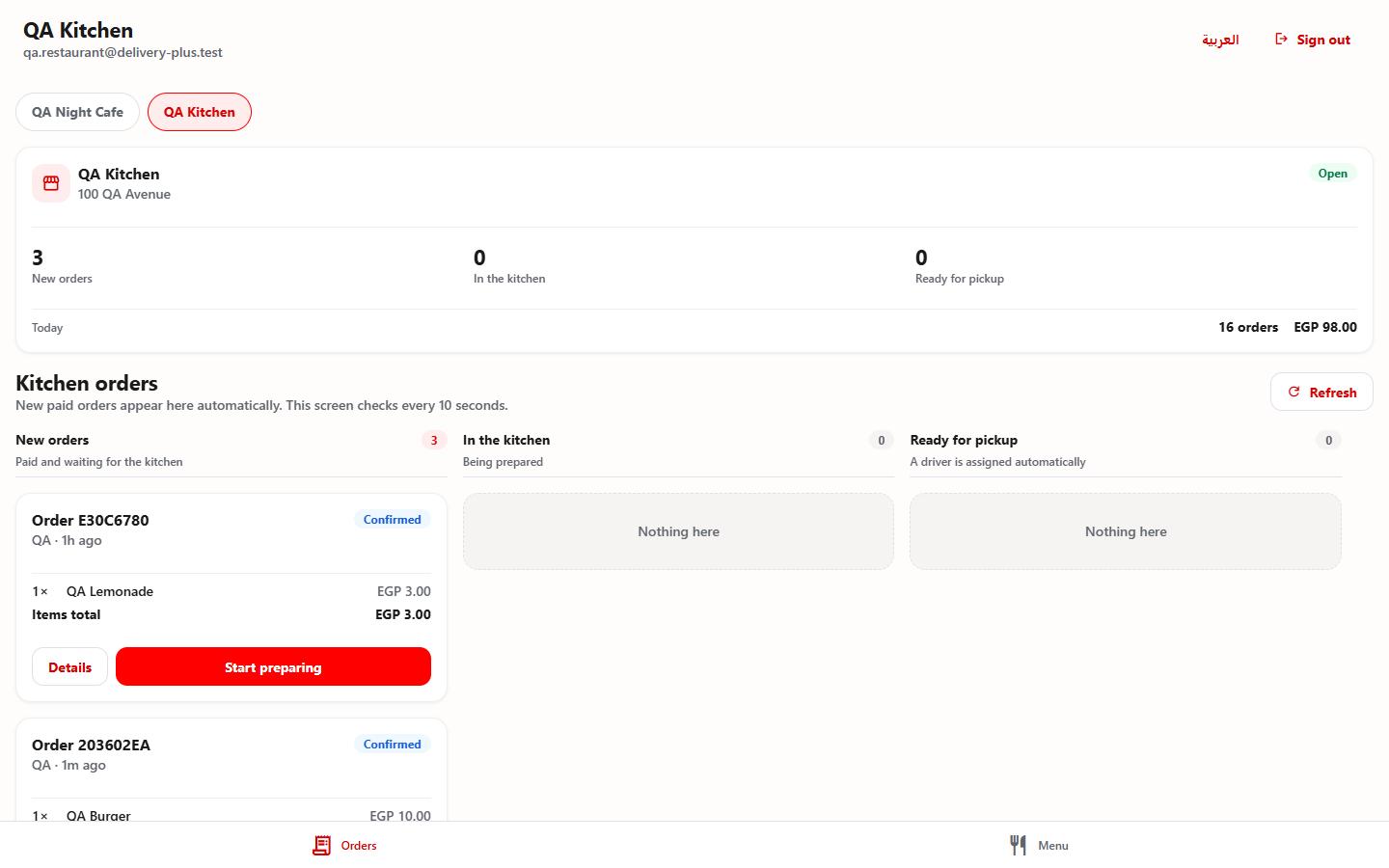
Restaurant order board with a new paid order
Restaurant
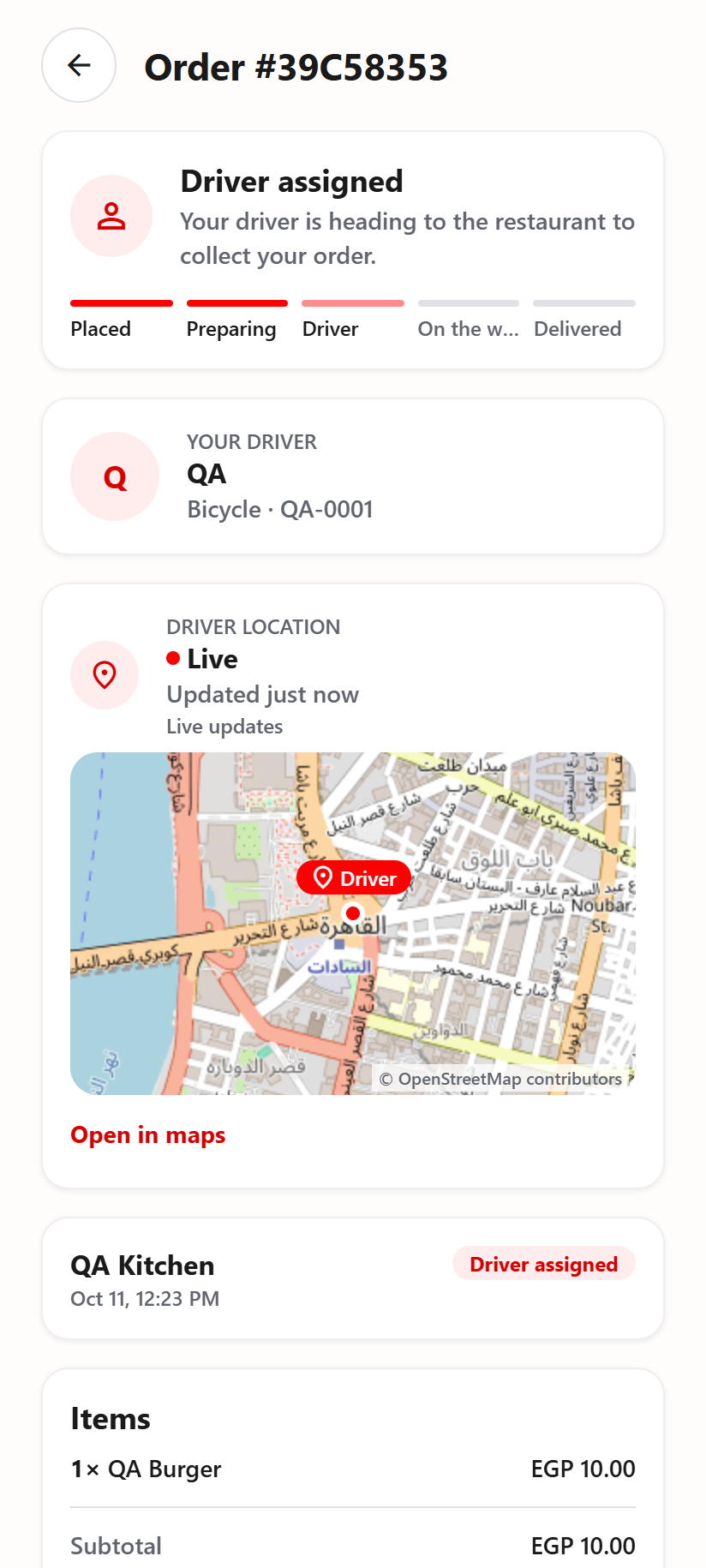
Customer order screen with the driver card and the live map
Customer
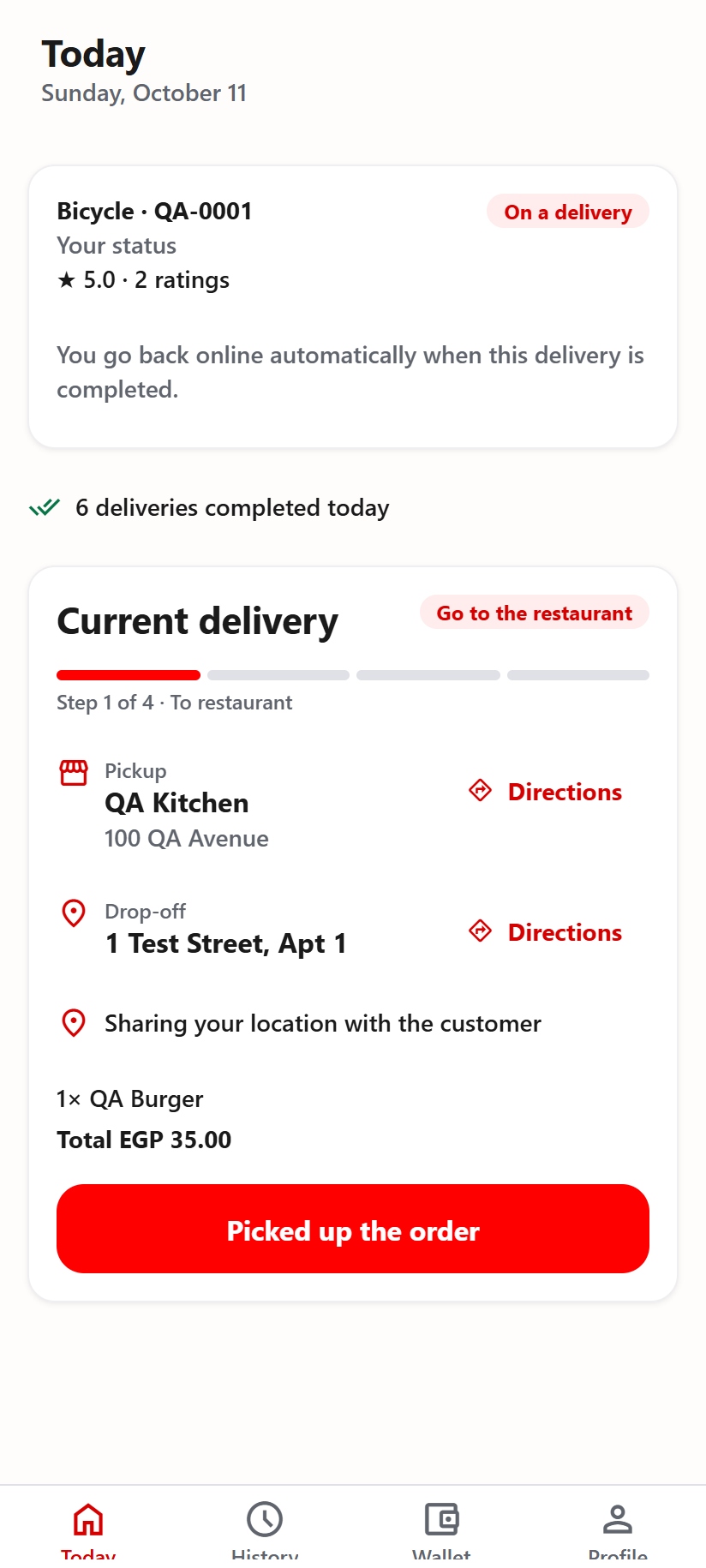
Driver app showing an automatically assigned job
Driver
Apps
3

customer · restaurant · driver

Backend services
12

NestJS, behind one gateway

Event streams
3

Kafka topics, each with a dead-letter topic

UI test flows
26

Maestro, across the three apps

Real screenshots
103

English, Arabic, states, one full order

The story of one order

Watch one real order travel through all three apps

These screenshots come from a single order placed on the local test stack: the customer, the kitchen and the driver each act in their own app, and the backend connects them.

    Three apps, one backend

    Each role gets the app it needs

    Customer app

    Order, pay, follow the driver

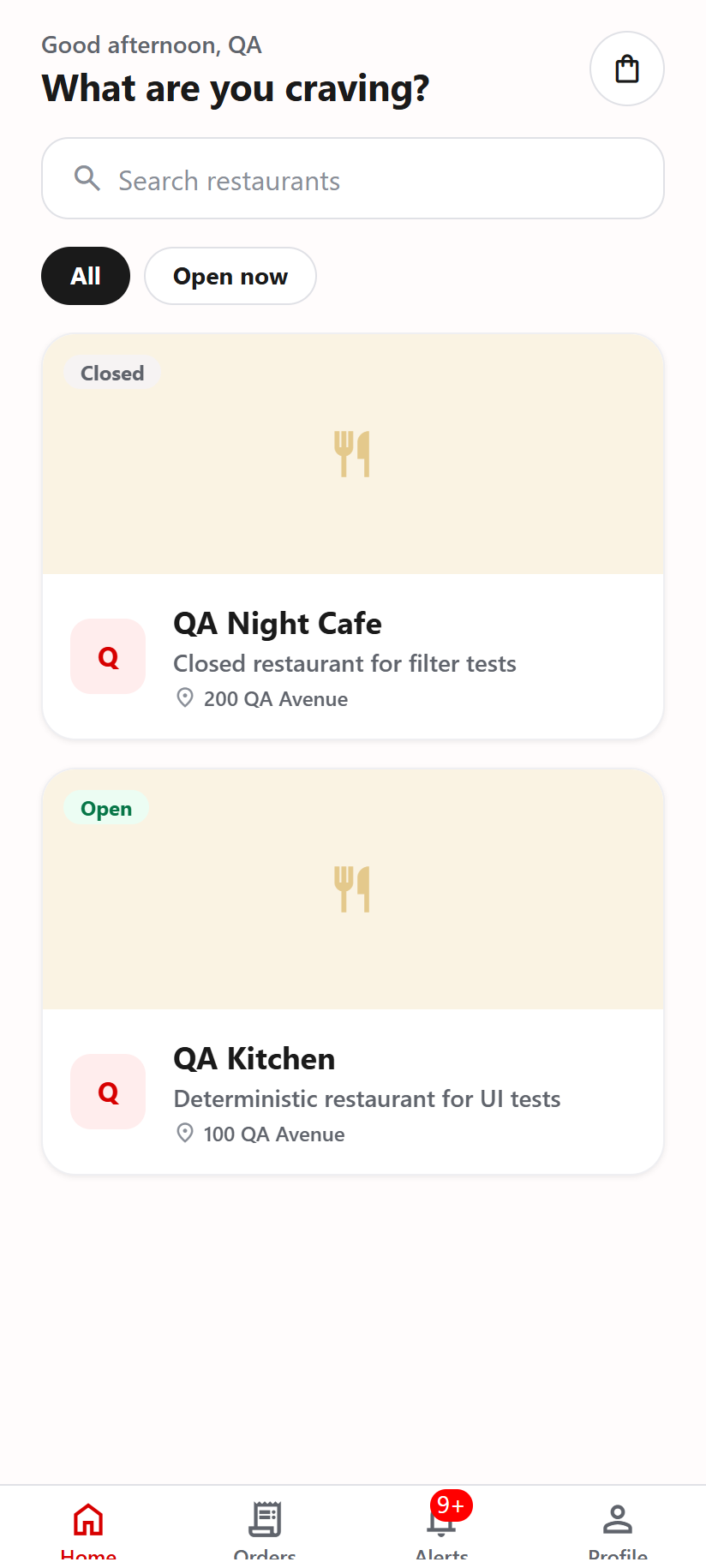
    • Browse restaurants, search, filter to Open now
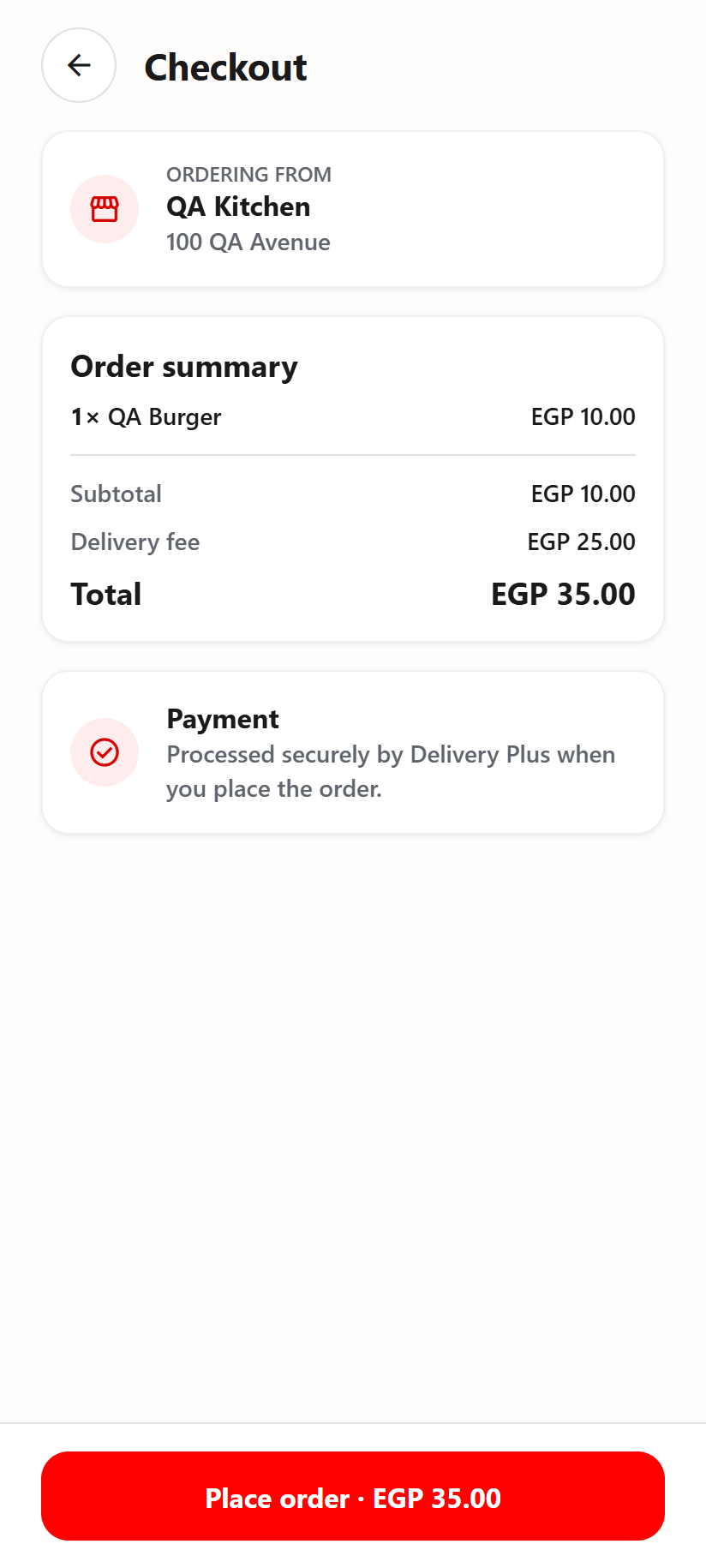
    • Checkout with the delivery fee quoted by the server
    • Live order screen: phase, driver card, map over Server-Sent Events
    • Rate the driver, order history with outcome reasons
    • Profile photo and phone verification by code

    Expo · React Native · Expo Router

    Restaurant app

    Run the kitchen from one board

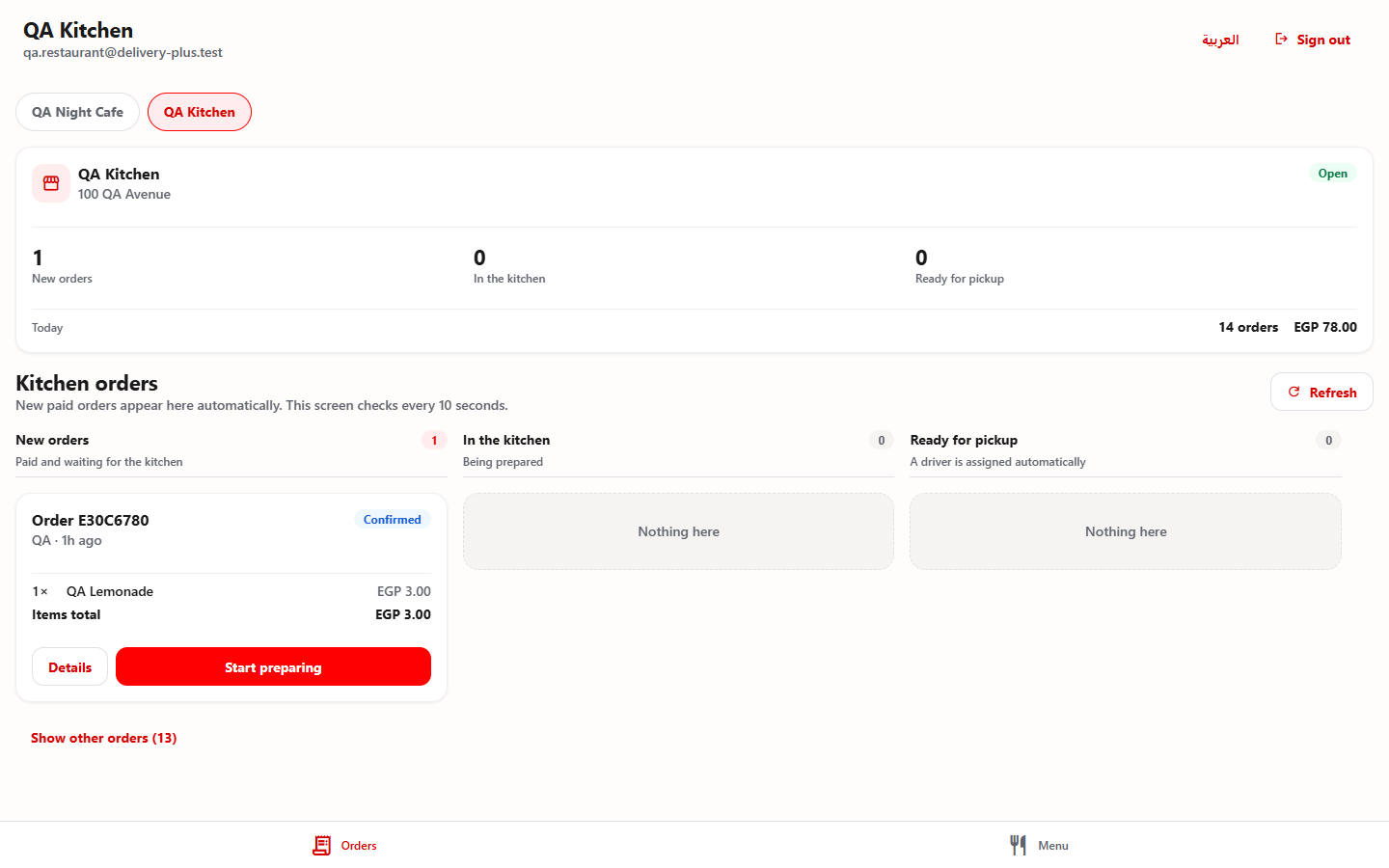
    • New, In the kitchen and Ready lanes that refresh on their own
    • Today's orders and food revenue, Cairo time
    • Order details and reject with a reason the customer sees
    • Menu editor: categories, items, photos, sold-out toggles
    • Open, Busy or Closed status

    Expo Router for the web

    Driver app

    Jobs come to you

    • Go online and receive jobs automatically, no dispatcher
    • One button for the next step, each with a confirmation
    • Shares location every 10 seconds while on a job
    • History and a wallet fed only by the earnings ledger
    • Profile with vehicle, review status and rating

    Expo · React Native

    Built for Egypt

    Arabic first, right to left, priced in pounds

    Arabic is the default language unless the phone is set to English, and every screen mirrors for right-to-left reading. Prices are Egyptian pounds and phone numbers are Egyptian mobiles, normalized to +20.

    Customer home
    Customer · Home
    Checkout with the delivery fee
    Customer · Checkout
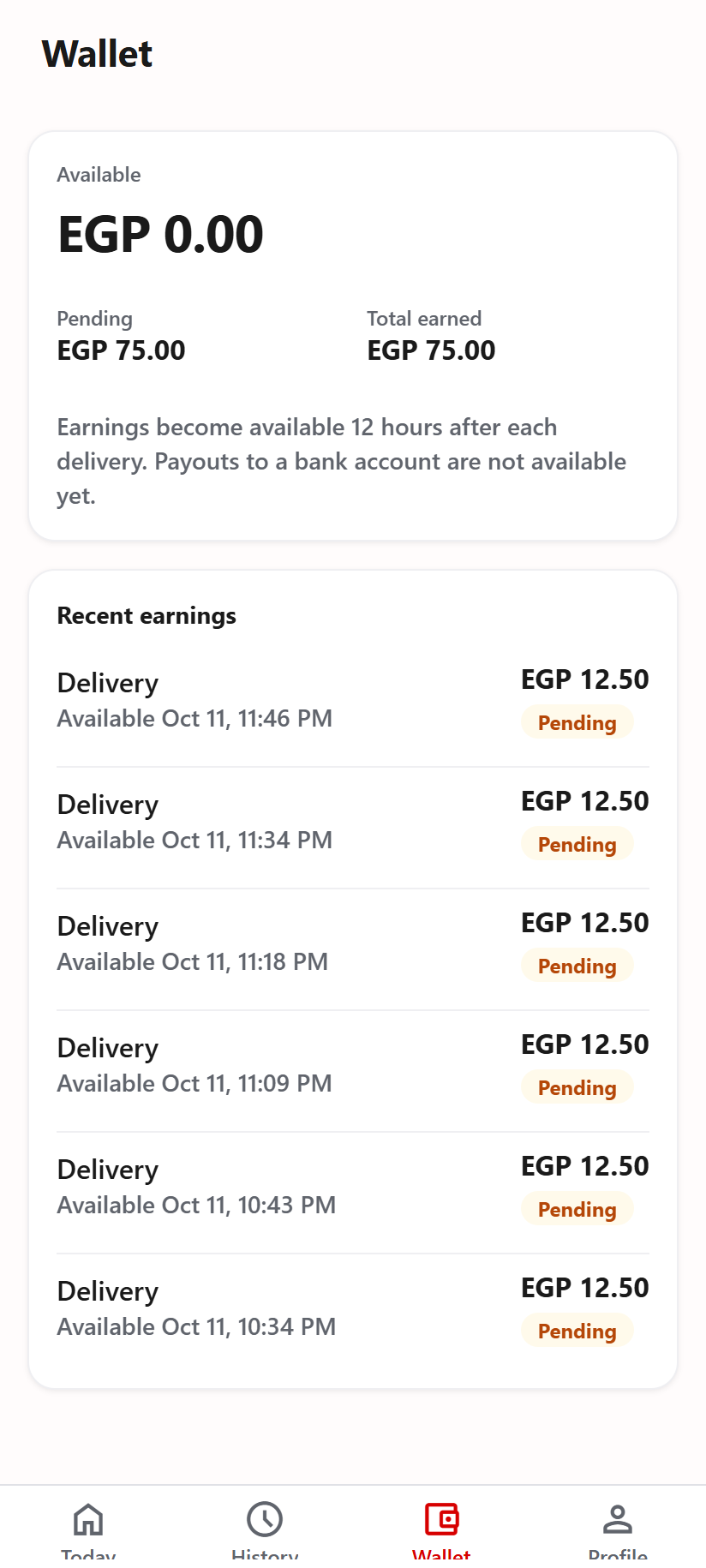
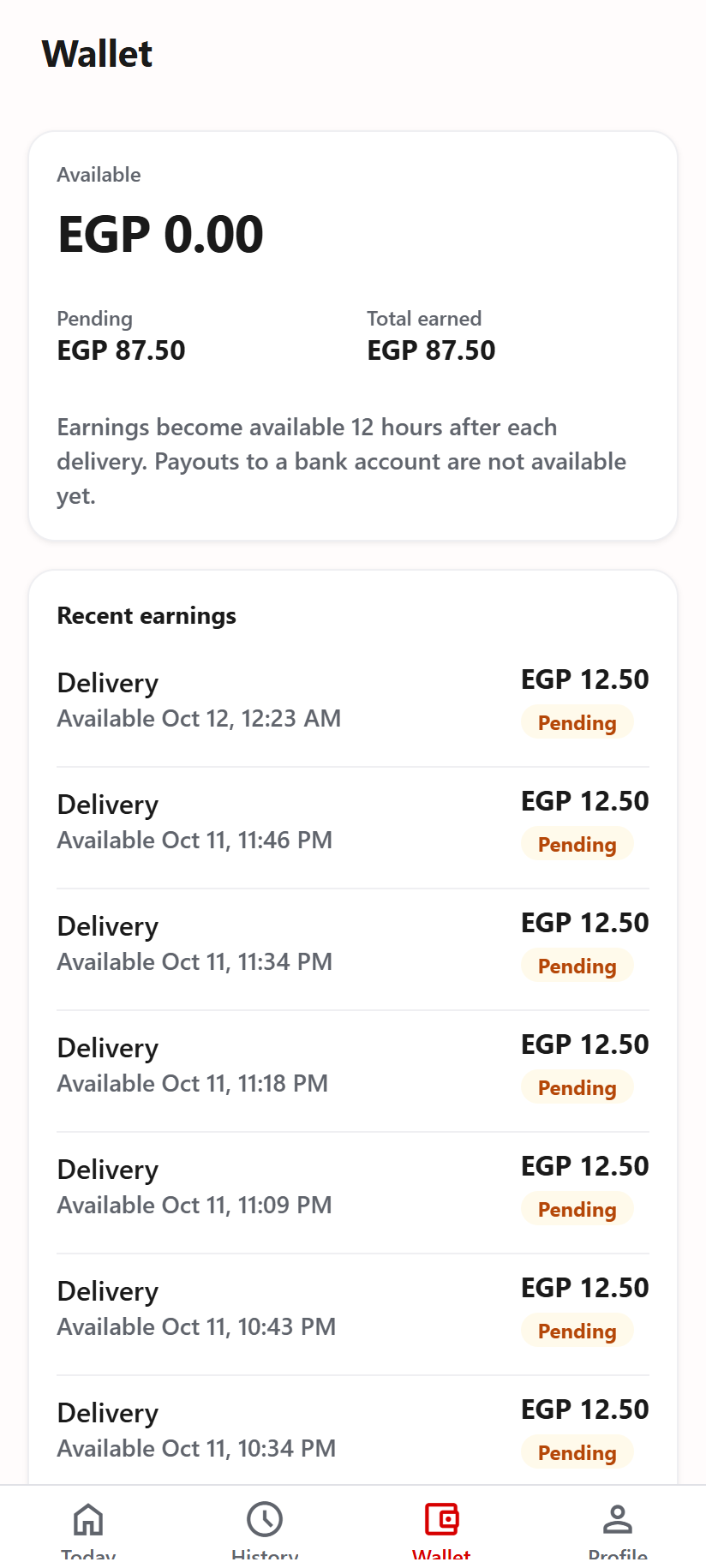
    Driver wallet
    Driver · Wallet
    Restaurant order board
    Restaurant · Order board
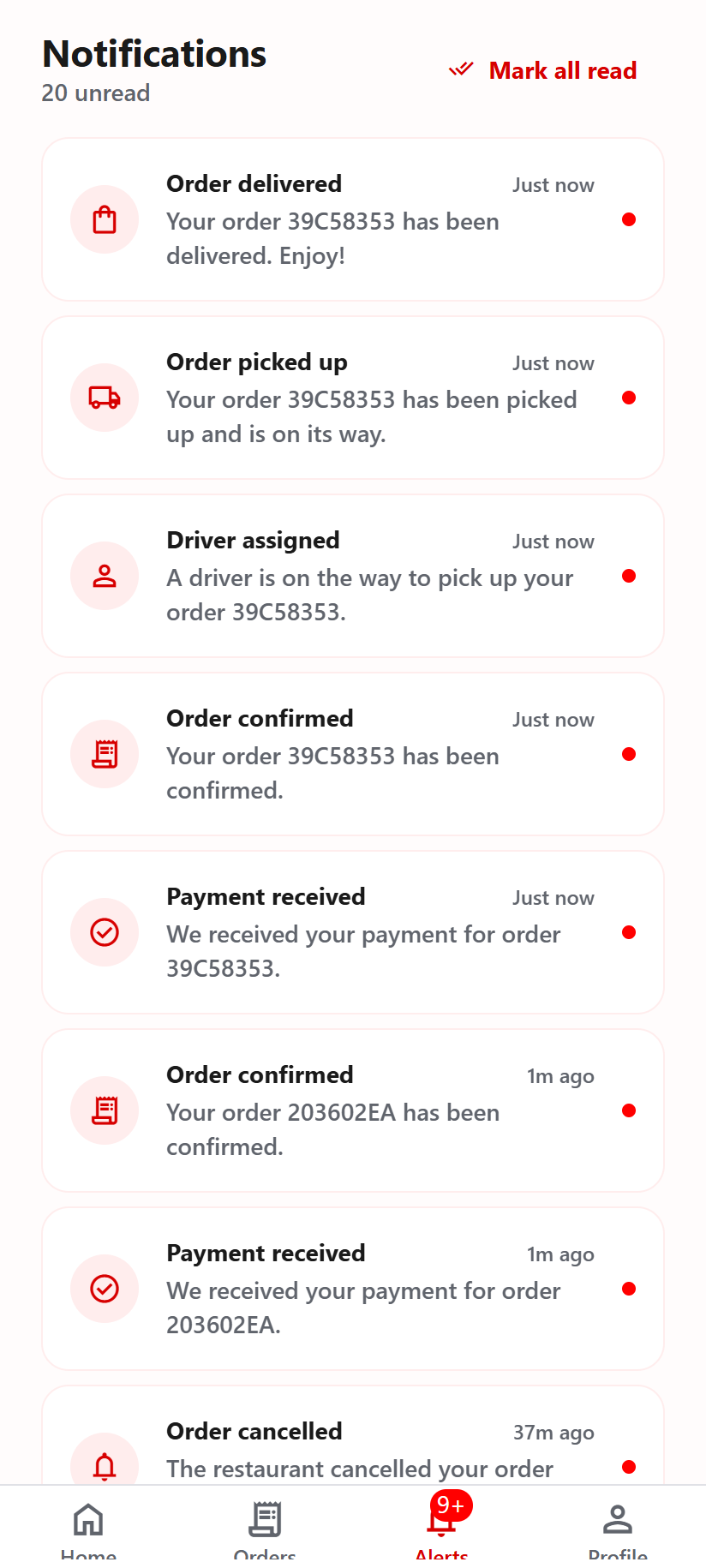
    • Translated notifications. The backend sends a message key and its values, so each person reads an alert in their own language.
    • Words kept as written. A restaurant's rejection reason sits inside the Arabic sentence in the words the restaurant used.
    • Checked on every change. A test fails if any text in an app is missing its Arabic translation.

    Under the hood

    Twelve services, one source of truth

    The apps only ever talk to the API gateway. Behind it, each service owns its own data, and state changes travel between services as Kafka events.

    Delivery Plus architecture The customer, driver and restaurant apps call one API gateway over HTTPS with a JWT. The gateway routes to eleven services. Order, payment and delivery services publish Kafka events that other services consume. PostgreSQL, Redis and S3-compatible storage hold the data. Customer app Restaurant app Driver app HTTPS + JWT API Gateway Services · each owns its data auth user restaurant menu cart tracking order payment delivery driver notification Kafka order.events · payment.events · delivery.events · each with a dead-letter topic PostgreSQL a database per service Redis cart · live location · dedup Object storage photos, uploaded directly
    The order, payment and delivery services drive the life of an order through events; the others react to them.

    Automatic dispatch

    When the kitchen marks an order ready, the delivery service creates the delivery and claims a free driver in one compare-and-set write. Two orders can never take the same driver, and orders wait and retry until someone comes online.

    Events that can't get lost

    An order change and its event are written in the same database transaction (transactional outbox). Event ids are deterministic, every consumer skips what it already handled, and failures go to a dead-letter topic that can be replayed.

    Live tracking you can trust

    The customer's map updates over Server-Sent Events and falls back to polling. A driver's position only counts for their own current delivery, and the screen never says "Live" for old data.

    Money you can audit

    A flat EGP 25 delivery fee is split 50/50 and frozen on each order. Driver earnings go to an append-only ledger and settle after 12 hours. Refunds are full, once per payment, under a row lock, with an audit record.

    Checkout that can't overcharge

    At checkout the cart is checked again against the menu. If a price changed or an item sold out, the order is refused with what changed and the cart is updated, so nobody pays a price they didn't see.

    Safe by default

    Roles live in the JWT, every service checks ownership, and internal routes need signed requests. Phone codes are stored only as hashes, with attempt limits and cooldowns.

    Tested the way people use it

    Each app has its own UI test suite, written in Maestro and run in CI. The flagship test drives all three apps through one order: the customer orders, the restaurant app cooks it, the driver app delivers it, and the customer rates the driver.

    Every backend pull request also has to pass:

    • Unit tests and lint in every service
    • A full-stack run of the critical workflow
    • Migrations on a fresh database
    • CodeQL, dependency audit and container scans

    Alerts for every stage of the order
    Driver wallet with the delivery's EGP 12.50 share pending

    Honest status

    What works today, and what doesn't yet

    Working end to end

    • Ordering, kitchen workflow, automatic dispatch and delivery
    • Live tracking, ratings, order history and alerts
    • Delivery fee, driver earnings ledger and wallet
    • Cancellations with automatic full refunds
    • Menu editing with photos, profile photos
    • Arabic and English with right-to-left layouts

    Not there yet

    • Payments and refunds are simulated: no payment gateway yet
    • No SMS provider, so phone verification is off in production
    • No push notifications and no arrival-time estimate
    • No bank payouts for drivers
    • Production operations (metrics, backups, deploys) in progress
    • Screens are web builds; native Android and iOS are not yet tested

    Stack

    What it's built with

    Backend

    • NestJS
    • TypeScript
    • Node.js 22
    • PostgreSQL 16
    • TypeORM
    • Apache Kafka
    • Redis
    • S3-compatible storage
    • OpenAPI

    Apps

    • Expo
    • React Native
    • Expo Router
    • React Native Web
    • OpenStreetMap

    Quality and delivery

    • Maestro
    • Jest
    • Vitest
    • GitHub Actions
    • Docker Compose
    • CodeQL
    • Trivy

    Read the code

    The backend platform is open source. The issue tracker and roadmap live there too.